About The Project
In 2013, Article One Partners, a patent research firm that's now part of RWS, hired me to consult on a crowdfunding campaign to fight patent trolls. They found me through my StreetXSW failure analysis, which showed I could think strategically about why campaigns succeed or fail.
I didn't just advise them: I reshaped the entire project strategy by redesigning what the campaign would actually deliver and lowering their funding goal from over $100,000 to $17,500. I wrote the script for the campaign video, directed and edited it, and wrote all the copy for the project page. The challenge was explaining a complex legal and technical issue in a way that would motivate everyday people to care and contribute.
Just as we were about to launch, the campaign was delayed for months due to internal reviews, and by the time it went live in December 2013, we'd lost all momentum. While the project ultimately didn't succeed, AOP valued my work enough to compensate me despite the failure. The project taught me crucial lessons about client work, explaining complex topics clearly, and the structural limitations of crowdfunding as a business model.
The Challenge
AOP's initial plan was to raise funds to invalidate a specific patent being used by a troll in court. They ran a network of patent researchers who could find "prior art,” evidence that ideas in a patent already existed publicly before the patent was issued, which can get the patent struck down.
But there were two big problems with this approach:
Problem 1: The economics didn't work. Finding prior art and invalidating a patent in court could cost well over $100,000. From my research for A Kickstarter's Guide, I knew that 80% of crowdfunding projects raise $20,000 or less. Even though it was for a good cause, asking for six figures on a complex, wonky topic like patent reform was nearly impossible.
Problem 2: The concept didn't fit crowdfunding. Patent litigation is abstract, slow-moving, and hard to visualize. Crowdfunding works best when people can see a tangible outcome, such as a product, a film, or an experience. "Help us fight one lawsuit" doesn't inspire the same urgency as "Help us make this thing."
The bigger challenge, however, was communication. Patent trolls can be genuinely harmful as they extort small businesses and startups, stifle innovation, and cost defendants millions. But explaining why this issue matters to someone who has never considered patents before required making a dry legal topic feel urgent and accessible.
My Approach
Redesigning the Project
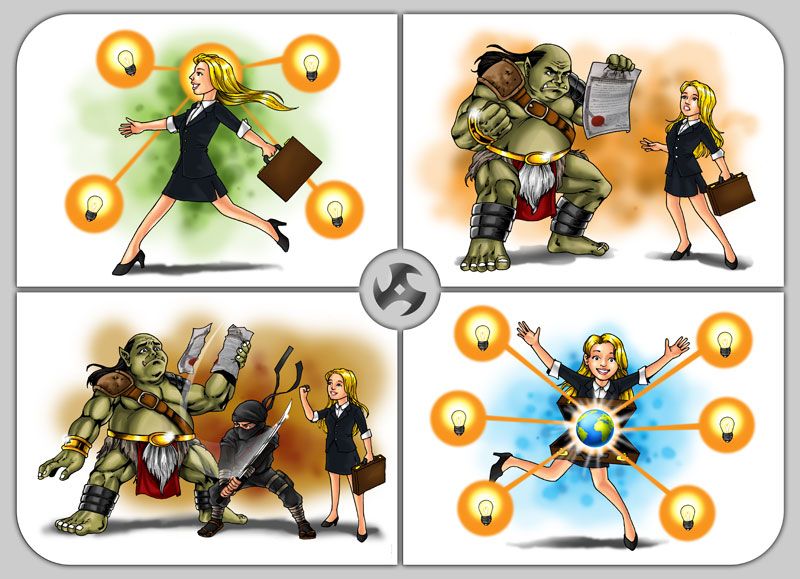
I proposed a different model: Instead of invalidating one specific patent in court, we'd create a free database of prior art that any company being sued by a troll could access. This wouldn't invalidate patents outright, but it would arm defendants with evidence and level the playing field.
This structural change allowed us to lower the funding goal to $17,500, a much more realistic target. Each multiple of that amount would fund research into another patent. It made the project feel achievable and scalable.
Making It Understandable
The real work was explaining patent trolls in a way that made people care. I needed to take a complex legal and economic issue and distill it into something urgent and relatable in about 500 words.
Here's how I framed it in the campaign copy:
"You may have heard that so-called 'patent trolls' are wreaking havoc on our economy. Even the President is worried about them!... The prospect that you might be sued for offering Wi-Fi in your café, hooking up a scanner to your computer, or producing a podcast is just preposterous and frightening!"
I used concrete examples people could visualize, coffee shops threatened for offering Wi-Fi, and small gaming companies sued by the dozens. I cited This American Life and the New York Times to build credibility, and I explained the concept of prior art without using jargon: "The value of a patent is that it is unique. If you can prove it isn't, the troll loses its power."
The goal was to make the abstract concrete and the legal personal.
Producing the Campaign
I wrote the video script, directed the shoot, and edited the final piece. I also helped AOP develop the reward structure. Then I worked with AOP to plan the launch. Just as we were putting the final touches on our campaign, President Obama began publicly discussing patent trolls. The issue was all over the news, and we had major press interviews lined up. We were riding high and ready for the project to take off.
What Happened
Then, unexpectedly, the project was put on hold for several months. I was never given specifics, but I believe it was a combination of legal review and internal decision-making at AOP. By the time we finally launched in December 2013, the news cycle had moved on, our press opportunities had evaporated, and we couldn't recover the momentum.
The campaign failed to reach its goal.
But here's what surprised me: AOP paid me anyway. My compensation was supposed to be entirely commission-based, meaning if the campaign failed, I'd get nothing. But they valued the strategic work, the project repositioning, and the quality of the materials enough to pay me regardless of the outcome.
What I Learned
Commission-based crowdfunding consulting doesn't work. If most projects raise under $20,000 and many fail entirely, the consultant takes all the risk while having limited control over outcomes like client delays or market timing. The economics only work if you're consulting on 30+ projects a year or landing the rare high-six-figure campaigns, which require connections I didn't have.
Any subject can be explained in roughly 500 words if you work at it. Patent law is dense and technical. Patent trolls are abstract villains. But by using concrete examples, accessible language, and emotional stakes (small businesses being extorted), I could make people understand and care. That skill of distilling complexity into clarity has informed every piece of writing I've done since.
Strategic thinking matters more than execution in consulting work. AOP didn't hire me because I could make pretty videos. They hired me because my StreetXSW failure analysis showed I could diagnose why campaigns succeed or fail and think strategically about structure and positioning. Redesigning their project to fit crowdfunding economics—that was the real value I provided.
Client work involves factors you can't control. I did everything right strategically and creatively, but internal delays killed the campaign's momentum. That's frustrating, but it's also reality. Sometimes excellent work doesn't succeed because of timing, luck, or decisions beyond your influence.
The campaign may have failed, but the experience taught me how to work with professional clients, how to take creative direction while also shaping strategy, and how to communicate complex ideas clearly under pressure. Those skills have proven far more valuable than any commission would have been.
If you are interested, you can check out the project page below.